- Bearish Banter
- Posts
- How the Fed Juggles Dollars: A Comedic Guide to Money Supply
How the Fed Juggles Dollars: A Comedic Guide to Money Supply

Bearish Banter
January 15, 2025
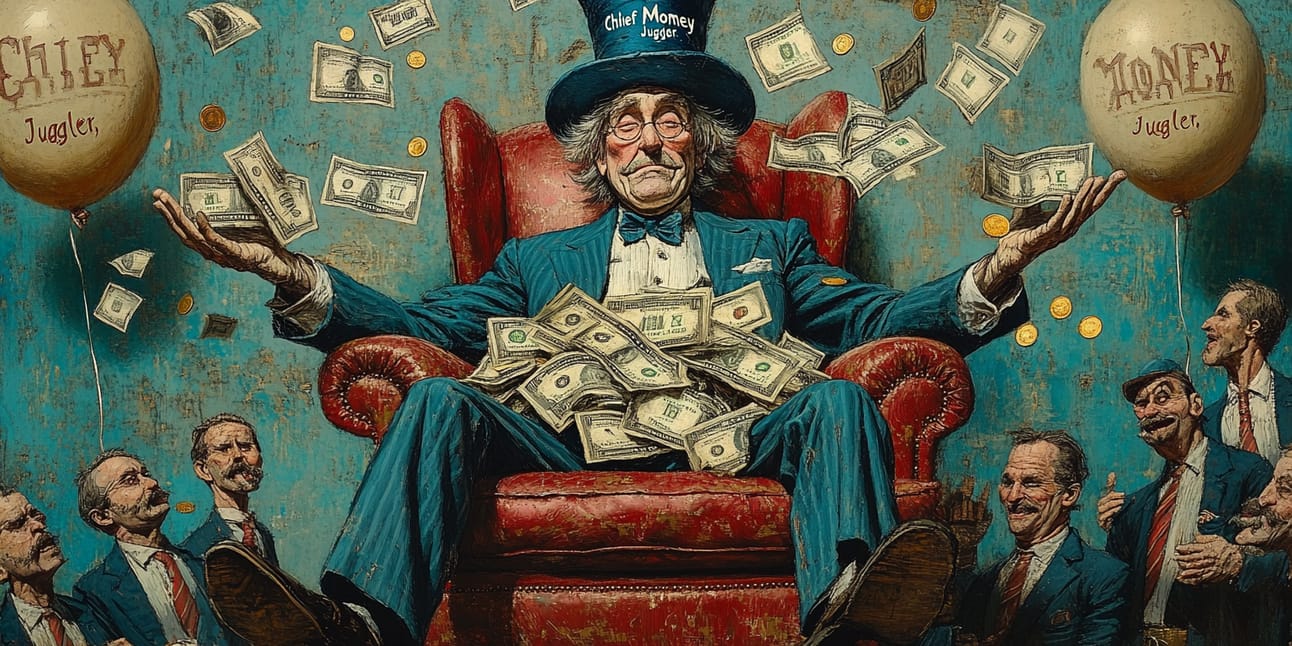
Ah, the Federal Reserve—the maestro of money, the puppet master of purchasing power, the Gandalf of greenbacks. You may wonder, What is Money Supply? and why does the Fed get to decide how much of it exists? Is there a secret lair under Washington, D.C., where they've stashed a cash printing press powered by the laughter of former bankers? Close, but not quite. Buckle up, because we’re about to uncover how the Fed juggles dollars (spoiler alert: no one’s in clown makeup...yet).
First, What Even Is Money Supply?
Imagine every single dollar in your wallet, your bank account, and that sketchy jar in the backyard you forgot to dig up after Y2K. That’s the money you use to buy coffee, pay your rent, and—it’s a stretch—maybe save a little (more on Saving Money Techniques later). Collectively, all these dollars floating around the U.S. economy make up the "Money Supply."
Now, the Fed’s job is to make sure there’s just enough of it—not too much, not too little. Too much money? We get inflation, and suddenly your $10 salad costs $30, and romaine lettuce becomes artisanal luxury. Too little money? Then you’re in a deflationary dungeon where nobody spends, businesses fold, and suddenly your local Starbucks is replaced by a barter station where lattes cost three goats.
To avoid these extremes, the Federal Reserve uses a set of highly fancy tools to manage money supply. If you’re imagining a leather-bound toolbox labeled "Economy Wizard Stuff," you’re not far off.
The Magical Toolbox of the Federal Reserve
1. Open Market Operations (OMO): Or, "Buy Low, Sell Lower?"
This tool lets the Fed buy and sell government bonds like it’s flipping items on eBay for the economy. When the Fed buys bonds, it’s like sprinkling extra cash into the financial system. When it sells bonds, it does the opposite—like a frantic parent confiscating Monopoly bills after catching the kids cheating at the money printer.
By either pumping cash into the economy or sucking it out (economics is really just a glorified vacuum game), the Fed ensures the money supply doesn’t go rogue.
Satirical Spin: Ever dream of the government giving you money? Well, this isn’t that. The Fed plays hot potato with cash and bonds, and we get to watch the fireworks—kudos to the Fed for somehow making "OMO" sound both technical and vaguely suspicious.
2. Reserve Requirements: The "Grounded" Mode for Banks
Think of this as the Fed telling banks how much money they’re not allowed to spend. Banks, like teenagers with car keys, would absolutely lend all of your money at once if they could. To prevent that, the Fed sets a reserve requirement—essentially saying, "You can stay out late, but make sure some cash is home by curfew."
Raise the reserve requirement, and banks clutch their cash tighter. Lower it, and it’s a loan free-for-all. Either way, it’s the Fed acting as a strict yet oddly generous babysitter.
Heroic Spin on Saving Money Techniques: Maybe the Fed should try reserve requirements on us. "You’re allowed to splurge on avocado toast, but only after locking $50 in a savings account." Sounds harsh, but maybe we’d all finally have emergency funds.
3. Interest Rates—Where The Fed Wields Its Sorcery
Aka, the thing everyone blames for their rising mortgage payments. The Fed tweaks the federal funds rate (essentially the interest rate banks charge each other), which then sends ripples through the economy faster than a TikTok trend. Lower rates? Borrowing becomes cheap and fun—the economic equivalent of a 99-cent sale. Higher rates? Suddenly, taking out a loan feels like mortgaging your firstborn.
Example: Imagine you’re debating whether to upgrade to a new car. At low rates, the loan terms are practically begging you to live extravagantly. But raise that rate to 8%, and suddenly your old rusty sedan seems a lot more charming (and less ruinous).
How the Fed Stirs the Economic Soup
Now that the tools are out of the bag, what does all this juggling of money supply actually do? Turns out, the Fed’s "big moves" influence the economy in ways that could make or break your wallet.
Inflation—The Most Annoying Party Guest
Too much money supply, and inflation shows up, stealing the chips and doubling the price of guacamole. By reigning in money circulation, the Fed tries to make sure this unwanted guest doesn’t crash our economic fiesta. Conversely, if inflation gets too low, the party gets stale—stagnation, anyone?
Employment—Jobs Galore or Jobless Blues
Fed policies directly affect whether businesses have both money to expand and the confidence to hire. Low interest rates? Everyone’s hiring! High rates? Businesses get stingy, and hiring slows—cue your frenemy Cheryl’s endless job search woes.
Purchasing Power—Your Dollars on a Diet
When inflation’s under control, your $5 still buys you a coffee (and maybe even a muffin). When it’s not, the same $5 gets you side-eye from the cashier. Understanding money supply management helps you prep for life’s inevitable "my dollar feels lighter" moments.
Saving Money Techniques in the Fed Era
Instead of nervously Googling "What is Money Supply" every time the Fed makes headlines, you can use their policies to your advantage. Here’s how to come out looking like a financial genius:
Snag Loans Wisely: When interest rates drop like a juicy plot twist, it’s the best time to consider those big-ticket purchases (houses, cars) before rates skyrocket again.
Kill Debt Demons: Rising rates mean your credit card debt gets even more expensive. Prioritize paying it off before interest eats your wallet alive.
Play the Savings Game: High rates? Your savings account might actually reward you for existing. Beef up that emergency fund while the Fed’s rate hikes work in your favor.
Diversify Like a Pro: Look beneath your couch cushions and rethink your portfolio. When rates climb, bonds can outshine stocks for once—because no one wants all their eggs in a meme-stock basket.
Final Thoughts on the Fed’s Dollar Juggling Act
The Federal Reserve may not juggle physical wads of cash in front of Congress (missed opportunity for entertainment if you ask me), but they are the unseen force shaping your financial life. Whether it’s keeping inflation in check, lowering unemployment, or just making sure your dollar buys you acceptable ice cream portions, their impact is far-reaching.
Understanding how "money supply" works and what monetary policy means for your bank account is like learning cheat codes for adulthood. Armed with this knowledge, you can make smarter financial decisions—or at least impress your friends at happy hour when the Fed inevitably trends on Twitter. Remember, in the circus of economics, we’re all just trying to keep our wallets from performing the disappearing act.
Reply