- Bearish Banter
- Posts
- The New Math of Retirement Withdrawals
The New Math of Retirement Withdrawals
(Or, How to Stretch a Dollar Until It Whimpers)

Bearish Banter
December 21, 2024
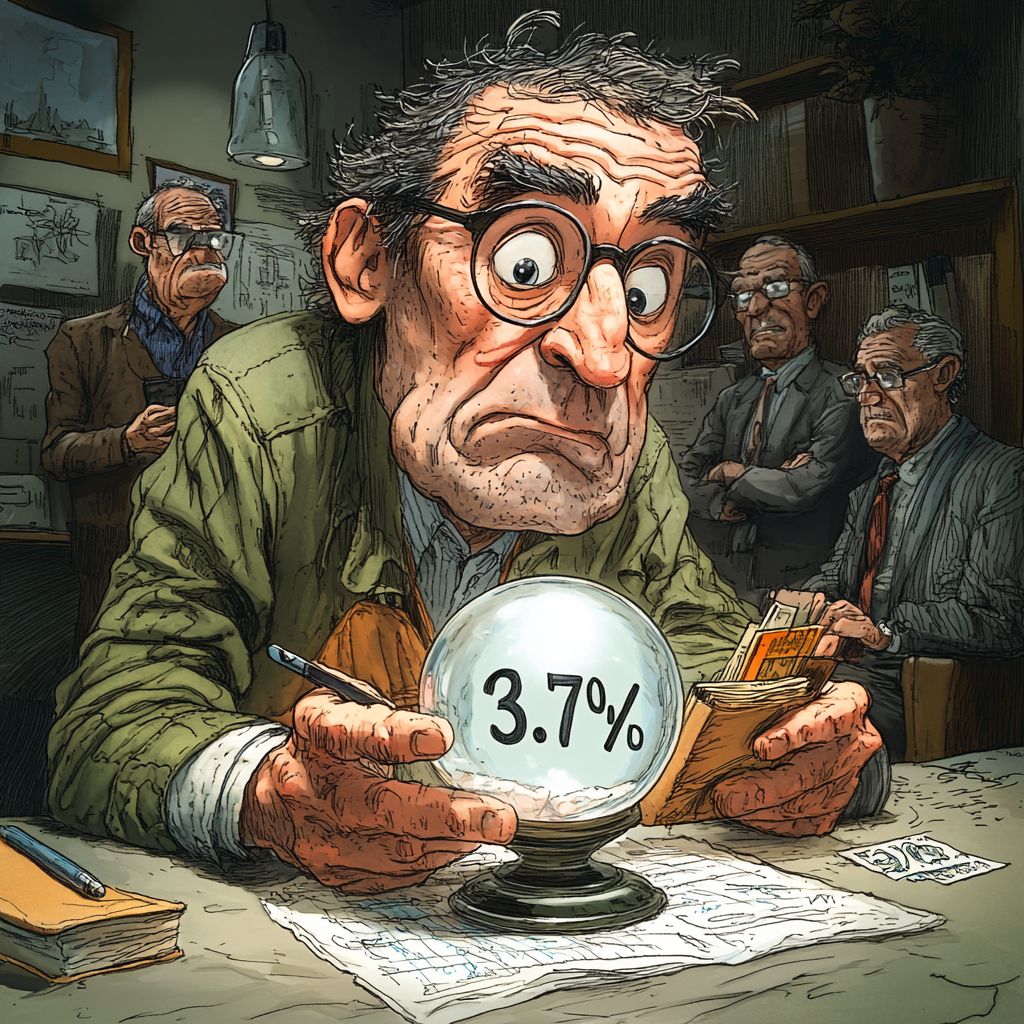
Ah, retirement—the land of endless relaxation, early bird specials, and the sudden realization that your savings have to last longer than a jar of mayonnaise in the fridge. For years, we believed in a mystical beacon of guidance known as the 4% rule. It was simple, comforting, and solid… like a well-worn recliner. But alas, much like that recliner, it might not hold up as well as we thought under the weight of modern realities.
According to shiny new research by Morningstar (because apparently scientists haven't cured boredom yet), that golden 4% is just a touch too optimistic. Nope, the magic "safe" withdrawal rate is now 3.7%, a figure so specific it sounds like it was calculated using a Ouija board and a financial calculator. Why, you ask? Well, stock markets have been partying hard, bonds are barely awake, and inflation is doing some kind of slow waltz in the background. The only thing this assures us is that math will always show up to spoil the fun.
The Case of the Waning Wallet
Picture this. Once upon a time, Janet, an average retiree with $1 million saved, was joyously withdrawing $40,000 a year under the 4% rule. But suddenly, the 3.7% revelation comes crashing down like an overstuffed moving box. Now Janet has to settle for—gasp—$37,000 per year. That’s $3,000 sliced mercilessly out of her annual budget, which means a lifetime supply of Hershey’s bars has just become an annual supply of Hershey’s Kisses.
“Why?” Janet wonders, clutching her retirement journal. The answer? Stocks and bonds have conspired to mock her. Higher valuations and lower returns mean her money doesn’t stretch as much. Meanwhile, Janet’s new friend Inflation just keeps nibbling at the edges of what she can afford, like an uninvited houseguest eyeing leftovers.
Flexible Spending? Who Knew?
Morningstar’s Christine Benz (financial guru, not to be confused with an overpriced sedan) advises retirees to think on their feet. “Spending,” she says, “should go up when markets soar and down when they’re sulking like a teenager denied Wi-Fi.” It’s essentially an emotional support strategy for your money—only it’s less comforting.
The key lesson? Retirement isn’t about parking yourself on a beach with pina coladas for eternity. Nope, your spending has to adjust based on market whims. When the market’s good, maybe you splurge on that deluxe cruise. When it tanks, well, it’s back to budget road trips in a Winnebago that needs duct tape repairs every 50 miles. Ain’t life grand?
Speaking of life plans, don’t even think your costs will be static. Research shows retirees’ spending naturally declines with age (honestly, who has the energy to blow through money at 95?). Throw in unpredictable healthcare and long-term care costs, and you’ve got a real plot twist for your retirement novel. Apparently, half of retirees will need long-term care, and the other half will just sit around stressing about it. Zero fun, folks.
Here’s a pro tip straight from Benz’s bag of wisdom. Want a little extra gravy on your retirement mashed potatoes? Delay claiming Social Security benefits until you’re 70. For every year you wait, your monthly payouts grow. Think of it as letting a precious wine age—his Cabernet comes in "dollars." But most folks ignore this because, well, there’s something about waiting that sucks the joy out of life.
Still, Social Security is where the drama leads. Baby boomers, for example, are playing both heroes and tragic figures in this saga. For the average retiree, 401(k) balances range from "meh" to downright “yikes”—hardly enough to splurge on avocado toast, much less handle retirement. Meanwhile, inflation-adjusted cost-of-living increases can barely keep up with the rising costs of reality. You think you’ve defeated inflation, but then boom! Eggs cost as much as gold bricks, and seniors wonder if powdered milk will make a comeback.
“Leftovers are a Luxury”
For those with some financial padding, Benz suggests setting aside a pile of money specifically for long-term care. Call it the “Just in Case Fund.” Don’t need it? Great—it becomes a slightly morbid inheritance. Need it? Well… at least you’re ready. It’s financial feng shui—a cushion of peace beneath the screaming uncertainties of old age.
Finally, for anyone still clinging to fantasies of this financial roller coaster being a solvable puzzle, remember Morningstar’s parting gift. They recommend a modest withdrawal, reduced spending, and a streak of vigilance so intense you practically become the Sherlock Holmes of personal finance.
And there you have it—a rule (4%) that wasn’t a rule, a safer number that feels entirely unsafe, and the calm reassurance that markets love to toy with your survival instincts. Retirement planning, dear reader, is now officially both a math class and a comedy of errors. Enjoy the ride!
Reply