- Bearish Banter
- Posts
- The Trade Deficit Diaries:

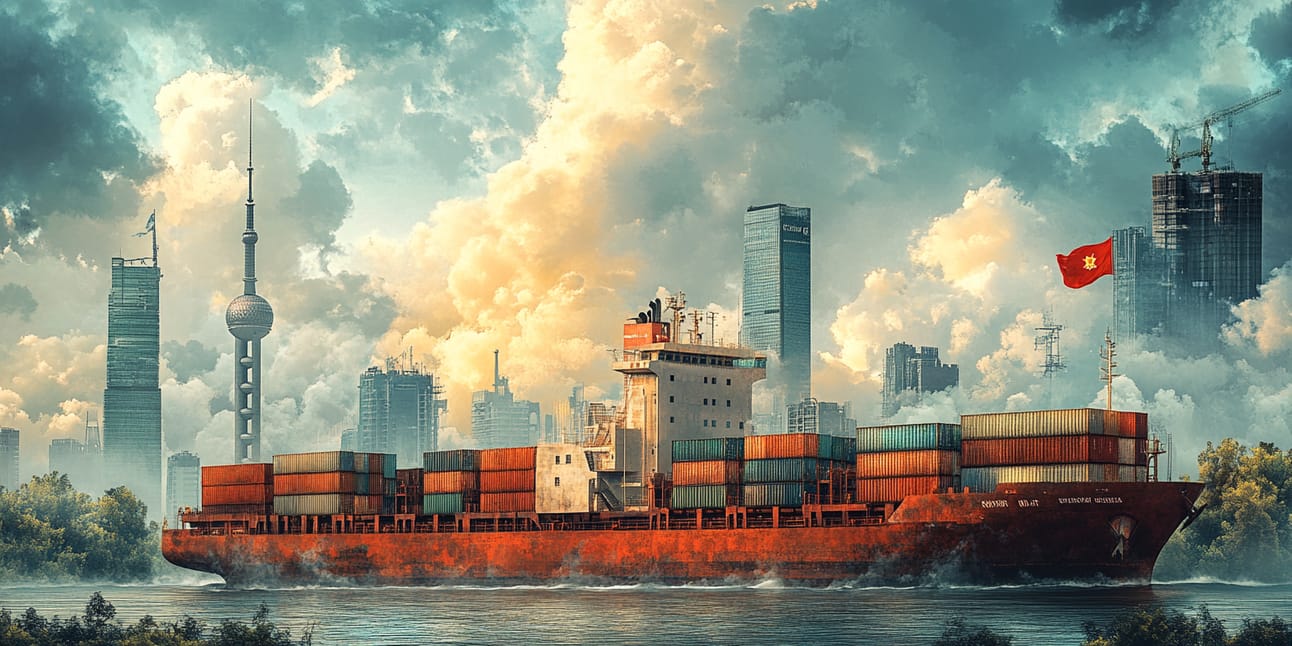
Ah, the infamous trade deficit—a concept so misunderstood, it should have its own reality show. You know the plotline by now. A country decides it’s going to buy more stuff from other countries than it actually sells back. Pretty scandalous, right? This leads to shocked economists clutching their pearls, while politicians wag their fingers with all the fiery conviction of a parent discovering their kid has maxed out the family credit card buying NFTs of pet rocks.
But is the trade deficit the villain it’s been made out to be? Or is it just the misunderstood anti-hero of global economics, like the Loki of fiscal policies? Buckle up, because we’re about to expose the juicy truth about why importing too many Velcro sneakers might not actually spell the end of your nation’s economy.
Misconception #1: Deficits Are as Bad as Your Ex’s Playlist
Ask anyone panicking about trade deficits, and they’ll tell you it’s some apocalyptic sign—a harbinger of doom, like when Mercury is in retrograde or Starbucks runs out of pumpkin spice. But here’s the thing. Trade deficits, much like that fourth slice of pizza, aren’t inherently bad—they’re just misunderstood.
Running a trade deficit isn’t like watching your bank account drift into the negatives because of too many avocado toasts. It’s actually more like borrowing your neighbor’s riding lawn mower because yours is, well, busted. You see, having a trade deficit means a country is consuming more than it produces and borrowing from foreign nations in the process. Think of it as living life large on a global shopping spree. French wine? Check. Fancy Italian leather? You bet. Tech gadgets from Asia that promise to change your life but mostly end up as glorified paperweights? Absolutely.
Even economic powerhouses like the United States have run chronic trade deficits since the 1970s and have still managed to create, consume, and critique pineapple pizza like nobody's business. The experts remind us that trade deficits don’t outright kill economies—they’re more a reflection of national saving and spending patterns than an indictment of any juicy government conspiracy.
Misconception #2: Imported Widgets Are Stealing Jobs
There’s another juicy controversy surrounding trade deficits—and it’s the claim that they murder jobs. Apparently, those imported glass unicorn figurines from overseas are threatening to take down your neighbor’s widget-making factory. The logic goes like this: “More imports = fewer local products = job apocalypse.” But does that claim hold water? Not really.
Most economists agree the actual culprit isn’t trade deficits but rather the silent rise of automation. That’s right, robots are swooping in and taking over manufacturing jobs like they’re auditioning for the next Transformers movie. Efficiency and productivity gains have been the real bosses in the tech senate, replacing those human worker bees with tireless machines churning out products faster than you can spell “unemployment.”
Also, it’s worth noting that trade creates both winners and losers, but on balance, it generally brings more positives than heartbreak. Case in point, America lost roughly 3.5 million manufacturing jobs to global trade over 28 years. Sounds scary, right? But during the same period, the country gained over 40 million jobs. Sure, fewer people were making conveyor belts and dustpans, but more of them ended up coding apps, solving crimes in laboratories, or selling you suspect weight-loss teas online.
A World of Economic Nonsense
Now, here’s where things really get sticky. With inflation on the rise and energy prices doing their best impersonation of a jack-in-the-box, global trade is facing some tough times. The World Trade Organization has warned against poor decisions, like shutting down international trade in favor of an isolationist “build a wall of self-reliance” policy. Per their advice, cutting ourselves off from global trade partnerships would be like trying to win a three-legged race without a partner—awkward and guaranteed to end in bruises.
Instead, diversifying supply chains is the way forward, and that means more than just fighting over who gets to manufacture semiconductors or toilet paper next. The world isn’t Netflix—you can’t just hoard manufacturing without buffering your global connections.
How You Can Trade Smarter (Without Breaking a Sweat)
Now, you might be thinking, “Cool story, but I don’t control national budgets. What do you expect me to do about this?” Here, dear reader, is your moment to shine. While you can’t change macroeconomic policies, small actions can make a difference. Think of it as throwing eco-friendly pebbles into a really big pond. Here’s how:
Shop Local Like a Boss
Skip the overseas one-click deals and opt for products made by your local artisans or businesses. Do you really need another $10 pair of gloves shipped 10,000 miles to reach you? Support Old Lady Ethel’s knitted scarf side hustle instead.
Cut Back on Consumption
Look, we get it. TikTok convinced you those matching ceramic spoons were a “must-have.” But buying things you don’t actually need adds to the import tally and clutter in your kitchen drawers. Reuse, recycle, and reconsider every item before it ends up in your cart.
Back Export-Friendly Brands
Figure out which high-value goods your country is actually good at producing and encourage their growth. If your country makes top-notch cheddar or solar panels, buy them proudly and suggest your friends abroad do the same—because nothing says fiscal patriotism like multinational cheese diplomacy.
Finally, remember that trade deficits aren’t Zeus hurling an economic lightning bolt down at your country. They're part of a much bigger global machine, full of quirks and efficiencies. The trick isn’t freaking out—it’s tweaking habits in ways that add up. And hey, maybe next time you online shop, give that locally-made pair of socks a shot over the factory-imported llama version. No promises on warmth, but at least your purchase can have a trade-savvy conscience.
Inspired by the article "What is a trade deficit and how does it affect the economy?"
Reply