- Bearish Banter
- Posts
- Tipflation and the Spread of Digital Tipping
Tipflation and the Spread of Digital Tipping
Bearish Banter
February 19, 2025
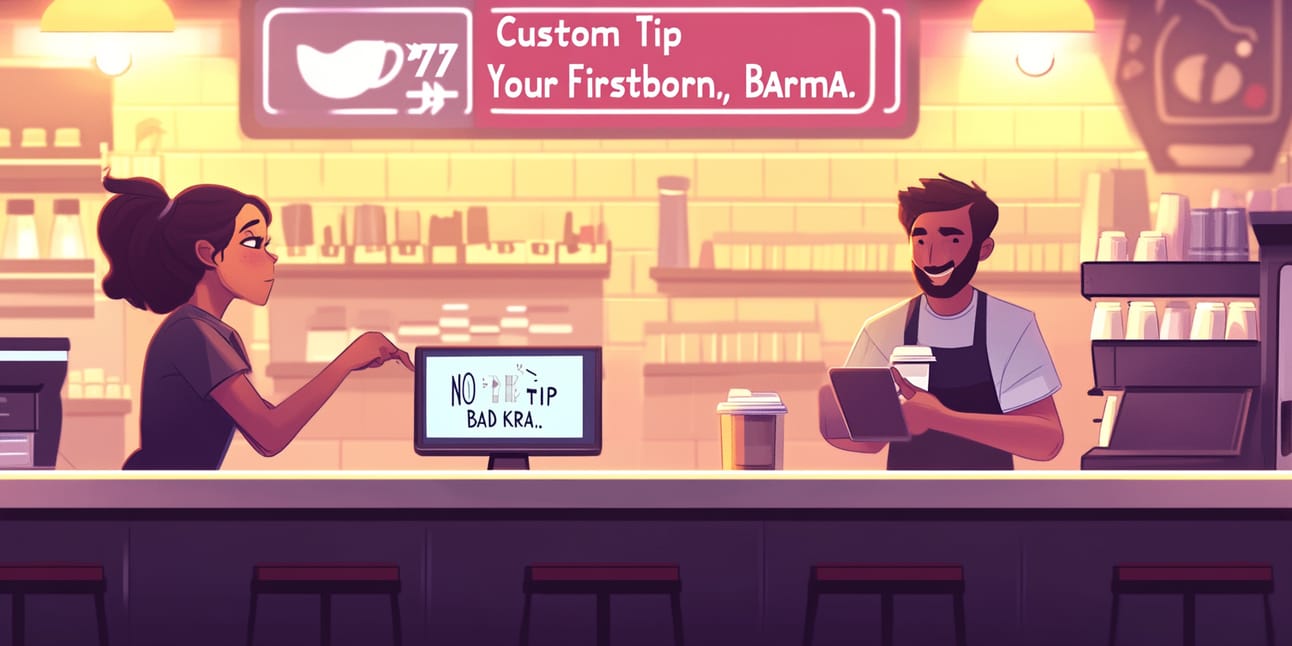
Ah, tipping—once a gesture of thanks, now a digital soap opera starring you, a touchscreen, and a barista giving side-eye. With the rise of Tipflation, those tipping prompts seem to pop up at every turn. Need a $6 latte? There's a prompt. Grabbing a pre-packaged sandwich? There's a prompt. Breathing the free air in a coffee shop? Would you like to tip 15%, 20%, or consider selling a kidney? It’s enough to make you wonder if even your toaster is going to demand a little extra next time it crisps your bread.
The numbers cement how widespread this madness has become. According to the article "America’s New Tipping Culture", around 72% of U.S. adults have noticed tipping prompts spreading faster than spoilers for the latest Netflix hit. They're showing up everywhere—from coffee shops to food apps—and even places like parking meters where the concept of “service” is about as real as a unicorn frappe. These prompts have turned casual transactions into a stress test for your wallet, and the psychological pressure to tip is the real cherry on this overpriced sundae.
The Rise of Digital Tipping: From Generosity to Gymnastics
Once upon a time, tipping made practical sense. You tipped full-service waitstaff or delivery drivers as a thank you for making life easier. Now, tipping occurs in scenarios that would make a Victorian-era butler raise an eyebrow. Self-checkout machines now have tipping prompts, as if the barcode scanner deserves a financial “thank you” for its unfailing red laser aim. And no, you're not imagining things—one study even revealed that 30% of people tip machinery out of sheer guilt. No wonder we’re short-circuiting as a society.
Picture this. You’re ordering coffee. The barista hands you your drink, spins the tablet around, and there they are—tip options staring back at you: 15%, 20%, 25%. Feeling the pressure, you hesitate. Recent data shows that tipping trends are shifting. According to the article "Tipping Point" on comomag.com, the average tip at restaurants in the second quarter of 2024 was 18.8%, down from 19.8% in late 2021 . Still, in that moment, hitting “No Tip” feels like declaring to the world why you despise puppies. Awkward, right?
The prompts don’t care about context anymore. Did you pick up takeout? There’s a tip suggestion for the person who maybe waved at your bag. Bought socks online? Have you considered tipping? Paid a parking ticket? Why not throw in a little extra to make your meter’s day? These requests are multiplying to the point where they rival subscription ads in annoyance levels. Tabulating your monthly tips could now rival calculating your rent.
What Tipflation Means for Everyday People
The impact on wallets is real, and it’s sneaky. Tiny, frequent tips don’t seem like much, but they add up; they’re the fiscal equivalent of being nibbled to death by ducks. According to the Pew Trusts, this increased pressure to tip translates into a subtle but steady rise in daily spending for most people. Those little prompts begin chipping away at the budget faster than your favorite fast-food rewards program.
And it’s not just your wallet under siege—it’s your dignity. The social pressure of tipping has turned what used to be an act of generosity into a theater of judgment. Studies have shown that many adults feel awkward skipping a tip even in situations where, frankly, tipping makes about as much sense as calling a self-scanner “Sir.” The psychology behind these prompts plays on our worst collective fear—being seen as stingy, even when inflation and stagnant wages say otherwise.
Practical Tips to Take on Tipplosion
Thankfully, you don’t need to hunker down and live off instant ramen just to escape the tipping apocalypse. Here are some strategies to deal with these never-ending prompts without compromising your financial sanity or your dignity.
Set Pre-Determined Limits
Decide in advance who deserves your tips. Full-service meals with waitstaff? Absolutely. The cashier who tossed an 80-cent pack of gum your way? Maybe not. Save your tipping energies for individuals providing genuine service or those who make your day brighter.Own the “No Tip” Button Like a Legend
Tap “No Tip” and walk away with your head high. You’re not heartless—you’re careful. Practice your poker face or, better yet, sunglasses indoors for added protection.Beware of Emotional Triggers
Don’t fall for guilt-inducing phrases on prompts like “Every bit counts” or “Support your local shop hero.” If you truly feel compelled to help small businesses, consider supporting through other means (buying their products, talking about them to friends) instead of automated tipping.Carry Cash for Intentional Giving
Tired of fighting tablet guilt-bombing? Carry some cash as a counter-option. Nothing beats the satisfaction of handing over a well-earned $5 bill for a service that genuinely made a difference.Remember, You Are Not a Monster
Finally, don’t beat yourself up for setting boundaries or skipping tips where you feel it’s not warranted. There’s nothing wrong with caring for your financial well-being. You’re not single-handedly ruining the service industry—promise.
The Tip-Off
Tipflation is everywhere, and it has officially made tipping feel less like a choice and more like a reflex. But just because screens are popping guilt prompts your way doesn’t mean you have to empty your pockets at every opportunity. Save your generosity for those who truly enhance your day and remember that you’re not part of a villainous anti-tipping conspiracy. Despite the social awkwardness, redefining how and when you tip could actually restore some sanity to your finances—and your latte breaks.
Reply