- Bearish Banter
- Posts
- Wrestling with Inflation:
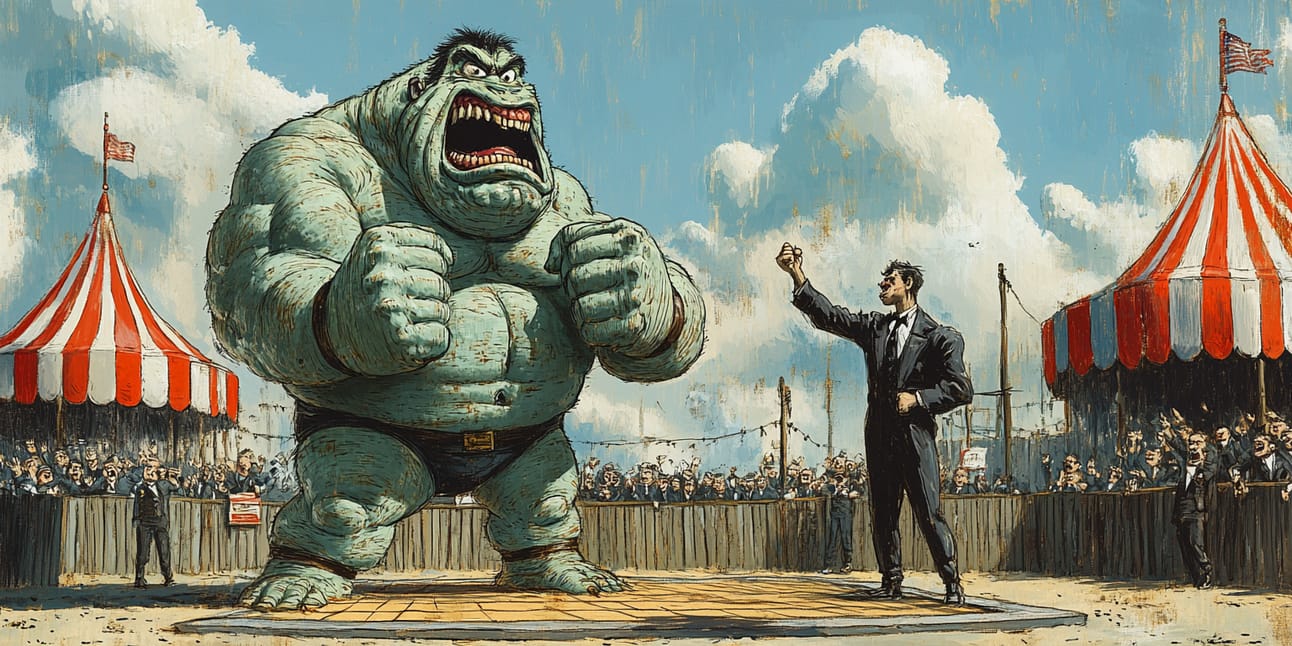
You know, fighting inflation isn’t as simple as asking it to kindly leave, or slipping it a $20 under the table and promising to call it later. No, this economic beast is a stubborn houseguest that eats all your snacks, runs up your credit card bill, and then demands you adjust the thermostat for its "comfort." Controlling inflation is an act that requires the finesse of a tightrope walker and the patience of someone trying to explain Bitcoin to their grandma.
Welcome to the Inflation Circus, where the main attraction is the Federal Reserve, balancing monetary policy on a wobbly highwire while juggling flaming torches labeled "interest rates," "employment," and, for some reason, "climate change."
The Fed and its 'Fancy' Toolbox
When inflation rears its ugly head, central banks love to assure us they have "tools." Ah, yes, tools. But what does this cryptically vague toolbox contain? A wrench, perhaps, to tighten fiscal policy? A screwdriver to fix inflation expectations? Or maybe duct tape to slap on the economy and hope for the best?
The central banker superheroes claim that if inflation rages, they'll whip out their trusty hammer and start whacking interest rates sky-high. Their favorite bedtime story is about the early 1980s, where Paul Volcker played the role of economic Thor, smiting inflation with 15% interest rates. The moral of this fairytale? If inflation is a dragon, brutal unemployment and recessions are the knights it leaves behind. Good luck to the kingdom.
But before the Fed can start banging its "interest rate" drum, there’s a looming problem. It’s called debt. And not the kind of debt where you’ve accidentally bought one too many lattes this week. No, this is the USA’s federal debt, sitting at 100% of GDP, or approximately "please-don’t-do-the-math" trillion dollars. It’s like discovering your credit card bill equals your annual salary—and realizing you still want to buy a jet ski.
Debt and the Domino Effect
Here’s the kicker. Raising interest rates doesn’t just tame inflation. It also triggers a delightful chain reaction described as "making debt really, really expensive." For every 1% rate hike, the federal budget suddenly incurs hundreds of billions of dollars in extra costs. It’s as if renting a U-Haul to move out of one bad situation comes with the surprise fee equal to your entire retirement savings.
And what does Congress do when they see the debt costs spiraling faster than a hamster on a wheel? Will they cut spending? Raise taxes? Both? Haha, good one. Historically speaking, Congress tends to react to fiscal responsibility like a toddler reacts to bedtime—kicking, screaming, and demanding a second lollipop instead.
At some point, the merry-go-round gets real dizzy. Investors start side-eyeing U.S. Treasury bonds. Why buy a promise to repay trillions when it’s clear the government is just hoping no one asks for exact change? This has all the makings of a debt crisis, or as economists like to call it, “Oh no, not again.”
Faith, Hope, and Central Bank Charity Auctions
The U.S. government keeps insisting everything’s fine, like a mechanic trying to sell you a car that’s leaking oil but comes with a shiny new air freshener. They say inflation expectations are "anchored," a truly poetic way of asking us all to remain blissfully optimistic. Their secret weapon? Everyone’s blind faith that the Fed will take care of it, no matter how ugly things get.
But what happens when this anchor becomes a sail? What happens when everyone realizes the toolbox is empty and what the Fed’s been wielding is a toy hammer from an old Fisher-Price set? The answer isn’t pretty, but it could involve skyrocketing prices, a nosediving dollar, and the sudden resurgence of bartering goats for coffee beans.
When Fights Become Farces
If the central bank truly wants to spook inflation into submission, it needs to stop tiptoeing around with ambiguities. People don’t believe you can win a fight if you keep shadowboxing while muttering about “transitory” inflation. Imagine a boxer entering the ring, whispering, “Don’t worry, it’ll tire itself out.” Inflation watches this performance, smirks, and orders another round of price hikes.
And before you know it, we’re back to the economic equivalent of the 1970s. Bell-bottom jeans might be fun, but a 13% mortgage certainly isn’t.
The Curtain Call
Ultimately, taming inflation requires courage, discipline, and a willingness to deliver bad news to the nation, no matter how much it screams. Unfortunately, as all of this tightrope walking and flaming juggling plays out, we, the audience, are stuck nervously clutching our wallets. But don’t worry—at least popcorn prices at the Inflation Circus are still "only" $10 for now. For how long? Who knows.
Sweet dreams, America. And sleep tight knowing that, whether or not inflation subsides, we can always rely on one thing—the endless creativity of economists to make it sound like someone else’s fault.
Original article by John H. Cochrane. "What Makes It Hard to Control Inflation." Published November 3, 2021. Link to Article
Reply